Maximizing Results: The Art of Combining LED Light Therapy with Skincare
Capsule Summary: Unlock the full potential of your home device by mastering the science of combining LED light therapy with skincare. This guide explores synergistic protocols, safe active ingredient pairing, and dermatologist-approved routines to amplify rejuvenation, acne clearance, and barrier repair for professional-grade results.
Introduction
The surge in at-home beauty technology has placed clinical-grade tools into the hands of skincare enthusiasts, with Light Emitting Diode (LED) devices leading the charge. However, owning the device is only half the equation; the true magic lies in combining LED light therapy with skincare strategically to enhance outcomes. This comprehensive guide serves as an advanced manual for users looking to elevate their photobiomodulation (PBM) sessions from a simple step to a fully integrated, high-performance ritual. We delve beyond the basics of “on and off” to explore the biological synergies between specific wavelengths and topical actives.
Our editorial analysis covers the physiological mechanisms that make stacking treatments effective, specifically how light energy can influence skin permeability and cellular metabolism to supercharge ingredient absorption. We will examine which ingredients act as power couples with red, blue, and near-infrared light—such as antioxidants that mitigate oxidative stress or peptides that accelerate matrix repair—and, crucially, which combinations to avoid to prevent sensitivity.
Furthermore, we address the practicalities of a Singapore-friendly routine, adapting protocols for humid climates where heavy layering can be counterproductive. You will find detailed AM and PM step-by-step guides, tailored to different skin concerns ranging from inflammatory acne to photoaging. Whether you are a novice user or a seasoned biohacker, this article provides the evidence-based roadmap to safely optimizing your LED investment.
Does combining LED light therapy with skincare work?
The efficacy of combining LED light therapy with skincare is rooted in the principles of photobiology and cutaneous pharmacokinetics. While LED therapy is a powerful standalone modality, research suggests that its interaction with topical agents can create a “1+1=3” effect, known as synergistic phototherapy. The mechanism is twofold: improved cellular receptivity and enhanced penetration dynamics.
When specific wavelengths of light penetrate the dermis, they stimulate mitochondria to produce Adenosine Triphosphate (ATP), the cellular energy currency. This bio-energetic boost revs up cellular metabolism, making skin cells more efficient at utilizing the nutrients provided by topical skincare. For instance, red light (633nm) is renowned for fibroblast stimulation. When paired with peptides or growth factors, the light provides the fuel (energy), while the skincare provides the building blocks (amino acids), resulting in accelerated collagen synthesis compared to either treatment used in isolation.
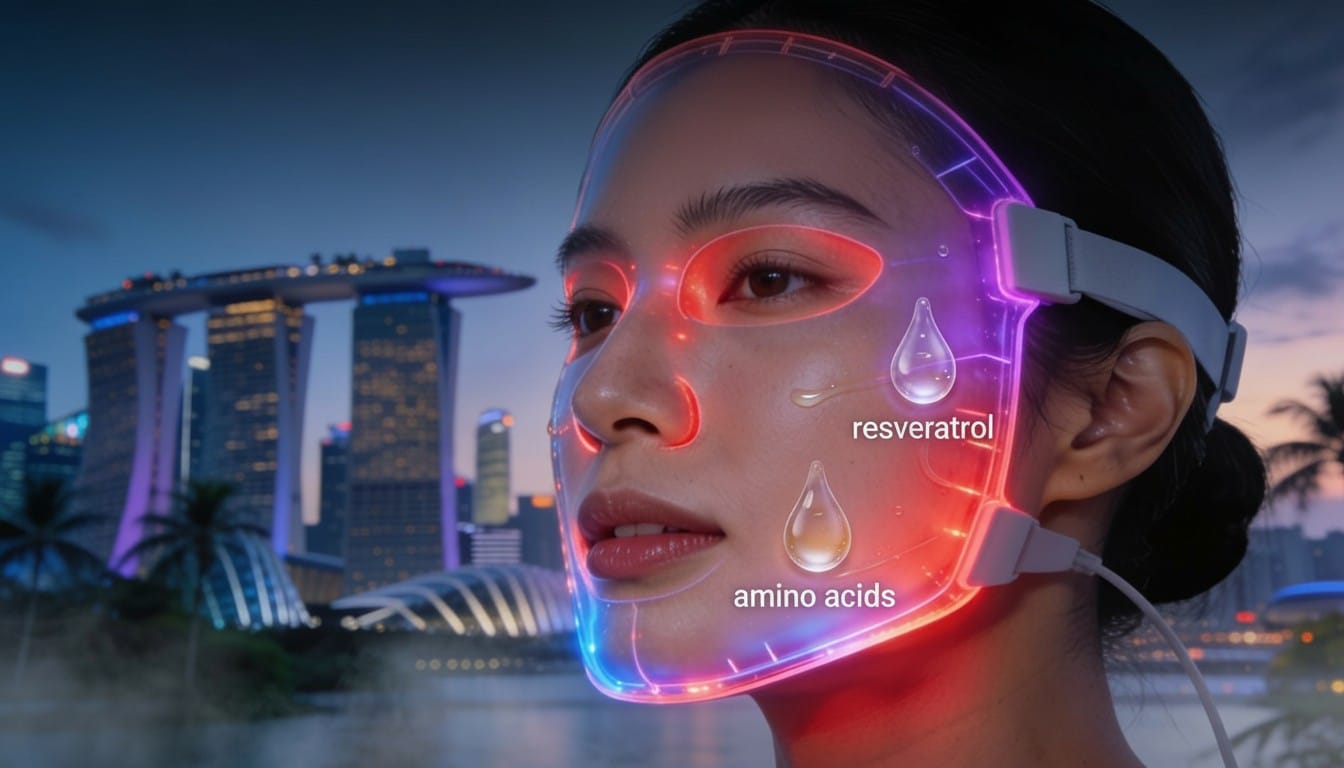
Moreover, certain compounds act as photo-enhancers or photo-protectors. A prime example is the synergy between LED and antioxidants. While PBM is anti-inflammatory, the metabolic spike it induces can transiently produce Reactive Oxygen Species (ROS). Applying potent antioxidants like Resveratrol or Green Tea Extract (EGCG) prior to or immediately after a session helps neutralize these free radicals, channeling the cellular energy purely towards repair rather than damage control. Studies have shown that polyphenols can protect cells from oxidative stress, allowing the red and near-infrared light to function more effectively in tissue regeneration.
Additionally, the mild, non-thermal energy from LED devices can transiently influence the stratum corneum’s permeability. While not as aggressive as ultrasound or microneedling, the increased local microcirculation induced by Near-Infrared (830nm) light enhances the delivery of hydrophilic (water-loving) molecules like Hyaluronic Acid and Niacinamide. This means that a serum applied under or immediately after an LED Light Therapy is likely to be absorbed more deeply, maximizing its hydrating and brightening effects.
Who should be cautious when combining LED light therapy with skincare
While combining LED light therapy with skincare is generally safe for most skin types, including sensitive and melanated skin, specific contraindications exist regarding photosensitizing agents. Understanding the distinction between ingredients that react to light versus those that sensitize the skin to light is crucial for preventing adverse reactions like phototoxicity or hyperpigmentation.
The primary caution applies to users on prescription medications known for photosensitivity, such as isotretinoin (Accutane), doxycycline, or certain diuretics. These systemic drugs render the skin hyper-reactive to light energy, even the non-UV wavelengths used in LED devices. In such cases, LED therapy should be paused until the medication course is complete and cleared by a physician.
Regarding topical skincare, Retinoids (including Tretinoin, Retinol, and Retinaldehyde) require a nuanced approach. Retinoids effectively increase cell turnover but can thin the stratum corneum initially, making skin more susceptible to irritation. While red light itself does not activate retinoids in a damaging way (unlike UV light), applying strong retinoids immediately before a high-intensity LED session can lead to “retinoid burn” or excessive dryness in sensitive individuals. The safest protocol is to use LED on clean skin or with a soothing buffer, and apply retinoids after the session.
Acids like Glycolic Acid (AHA) and Salicylic Acid (BHA) also demand respect. These exfoliants strip the outer dead skin layer. Using a high-strength peel right before a blue light session (which can be slightly drying) may disrupt the moisture barrier, leading to redness or stinging. Users with eczema, rosacea, or compromised barriers should avoid layering potent actives under the LED. Instead, focus on barrier-repairing ingredients like Ceramides and Panthenol during the treatment window to cushion the skin against any potential thermal or metabolic stress.
How to use it: AM/PM Integration
Optimizing your routine involves more than just wearing a mask; it requires timing your combining of LED light therapy with skincare to match your skin’s circadian rhythms and immediate needs. Below are editorial-approved protocols designed for the humid Singapore context, prioritizing lightweight layers and maximum absorption.
The AM Glow & Protect Protocol
Best for: Depuffing, Brightening, and Acne Control
- Cleanse: Start with a gentle, non-stripping cleanser. A milk or gel emulsion works best to remove night creams without leaving a residue that could block light penetration.
- Prep: Apply a lightweight, watery essence or a dedicated LED-conductive gel if your device utilizes microcurrents simultaneously. Look for ingredients like stable Vitamin C (Sodium Ascorbyl Phosphate) or Niacinamide. These antioxidants work synergistically with Red or Green light to fade pigmentation and defend against the day’s UV exposure.
- LED Light Therapy Session: Use Red Light (633nm) for 10 minutes to boost circulation and reduce morning puffiness, or Green Light (525nm) to target dark spots. If you have active breakouts, a 10-minute Blue Light (415nm) session can sanitize the skin before makeup.
- Seal: Follow immediately with a lightweight gel-moisturizer and a broad-spectrum sunscreen (SPF 50+ PA++++). The LED session will have primed your skin to absorb the hydration instantly.
The PM Repair & Regenerate Protocol
Best for: Anti-Aging, Deep Tissue Healing, and Relaxation
- Double Cleanse: Essential for removing sunscreen and pollutants. Use an oil cleanser followed by a foaming wash to ensure the skin is completely naked or prepared with a specific booster.
- Active Layering: This is the prime time for stacking. Apply a serum rich in Peptides, Hyaluronic Acid, or Resveratrol. These ingredients are heat-stable and thrive under the bio-stimulatory effects of LED.
- Pro-Tip: Avoid heavy occlusive oils or silicones before the LED session, as they can reflect light and reduce efficacy.
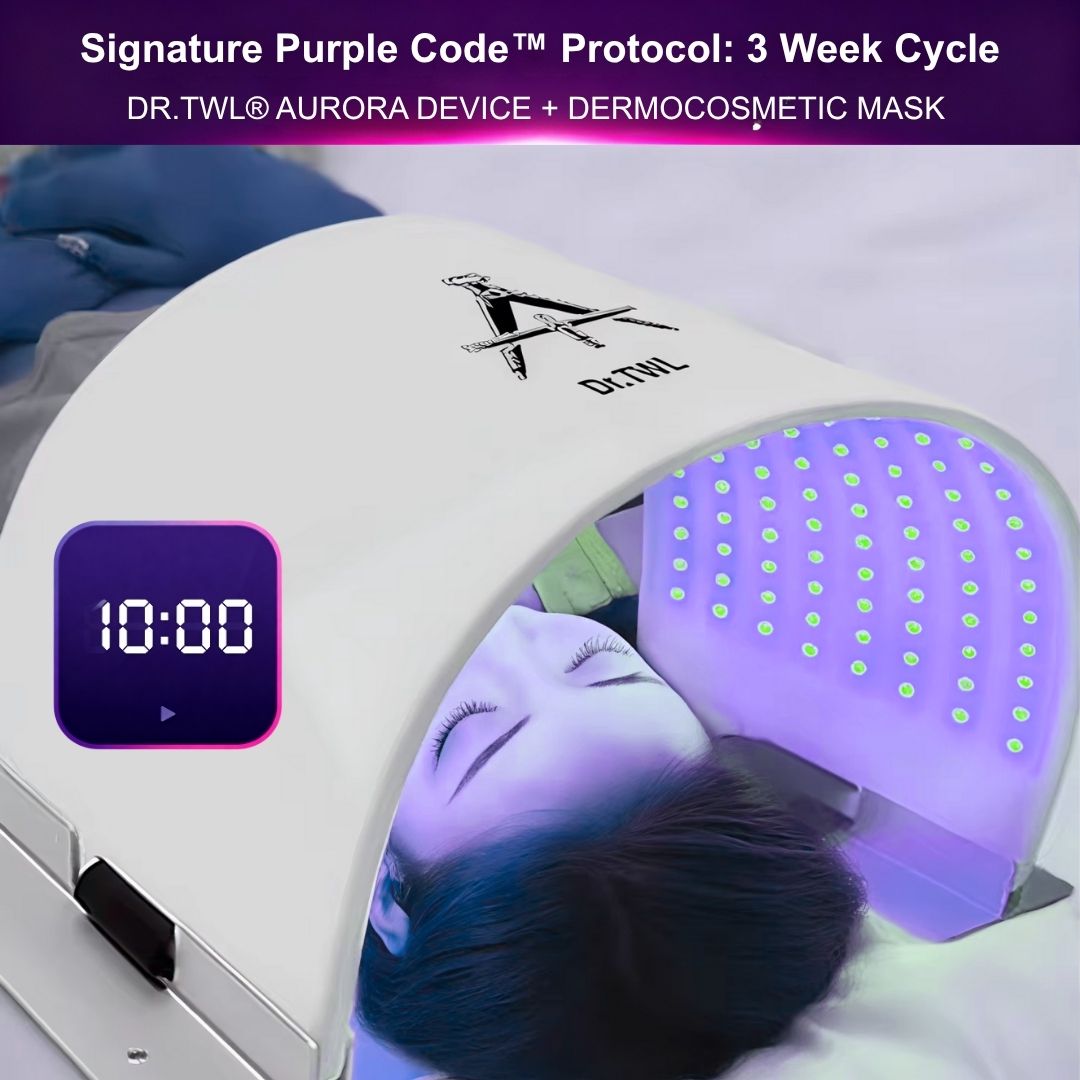
- LED Light Therapy Session: Engage the Signature Purple Code™ (Simultaneous Red + Blue) or Near-Infrared (830nm) setting for 20 minutes. This combination drives mitochondrial repair and lowers inflammation accumulated during the day. The NIR wavelength penetrates deep to relax facial tension—perfect for winding down.
- Post-Treatment: Now is the time for your heavy hitters. Apply your Retinol or Exfoliating Acids after the light session. The skin’s micro-circulation is elevated, allowing these potent actives to work more effectively. Finish with a barrier-restoring night cream or sleeping mask.
Featured Formulary Picks
To truly excel at combining LED light therapy with skincare, we recommend choosing a conductor that aligns with your specific goals. Both the Elixir-V™ Total Recovery Serum and the Amino Acid 360° Masque are formulated to create an optimal physiological environment for photobiomodulation, enhancing penetration without blocking light transmission.
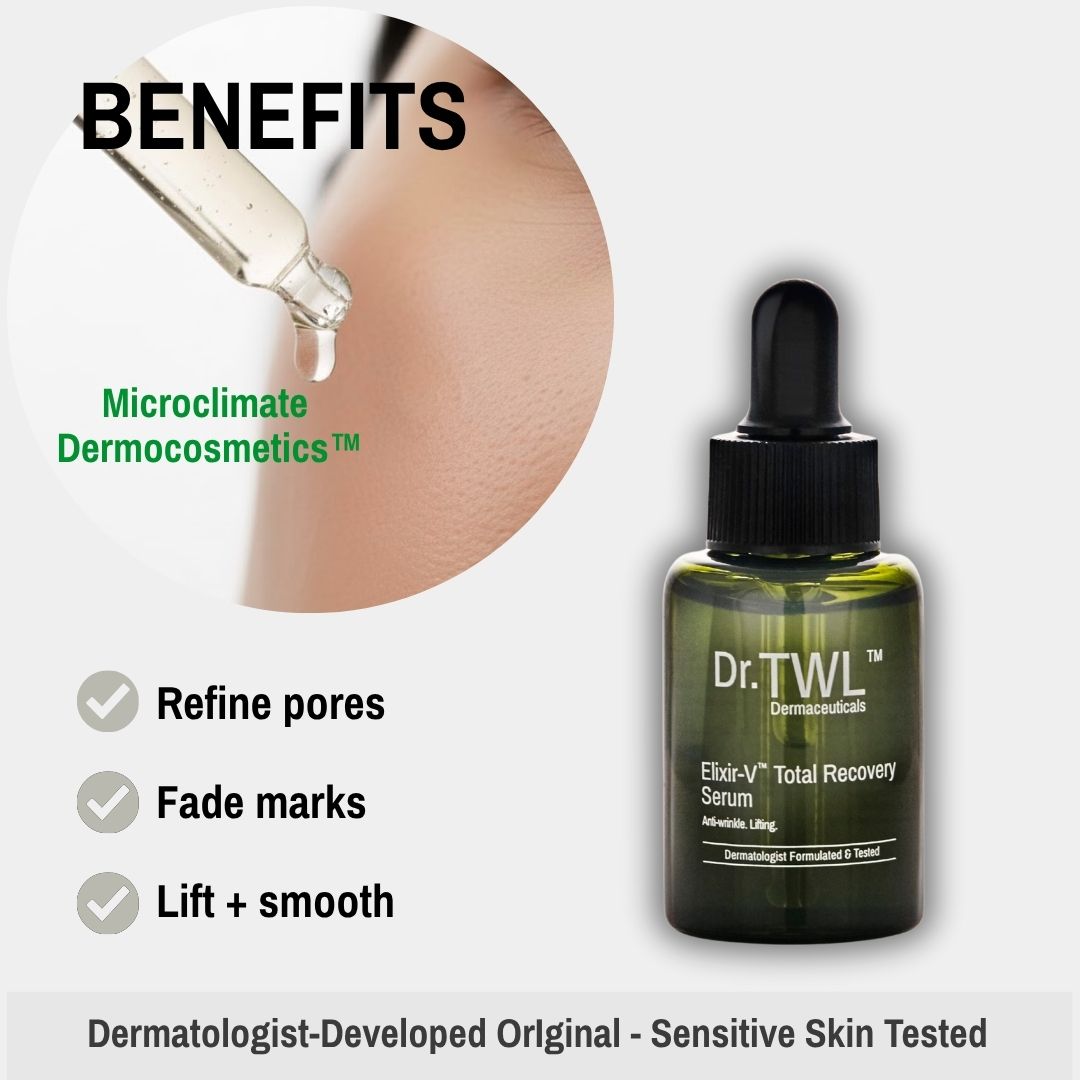
For Daily Repair & Anti-Aging: Elixir-V™ Total Recovery Serum
Formulated specifically for the Singapore climate, this potent trans-cutaneous serum features Centella Asiatica and Resveratrol—two powerful botanicals that have been clinically shown to synergize with LED therapy. Unlike standard heavy serums, Elixir-V™ Serum has a nano-emulsion texture that absorbs instantly, ensuring no physical barrier blocks the light photons. The Resveratrol component acts as a cellular shield, mitigating any oxidative byproducts from metabolic stimulation, while Centella Asiatica amplifies the collagen-building signals sent by Red light. It is non-comedogenic and free from photosensitizing additives, making it the ideal daily base layer for your LED ritual.
For Instant Lifting & Brightening: Amino Acid 360° Masque
If you are seeking an intensive flash facial effect, the Amino Acid 360° Masque is your go-to amplifier. This cooling gel masque is rich in Larecea™ Extract and lifting amino acids that work in tandem with the metabolic boost from LED light to firm and tighten skin contours. Its Vitamin C content brightens post-inflammatory hyperpigmentation, serving as a perfect complement to Green light therapy sessions. Crucially, its water-based, oil-free formula ensures it does not trap heat or deflect light energy—unlike traditional cream masks—making it safe to use either under non-contact panels or immediately post-session to stabilize the skin barrier.

Side Effects and Risks of Combining LED Therapy with Skincare
When properly executed, combining LED light therapy with skincare carries a very low risk profile, but awareness of potential side effects ensures a trouble-free experience. The most common issue is transient dryness. The increased metabolic activity and blood flow can slightly accelerate transepidermal water loss (TEWL) during the session. This is why hydration—both pre- and post-treatment—is non-negotiable. If you skip the moisturizer after a session, your skin may feel tight or look lackluster the next morning.
Rarely, users may experience mild erythema (redness) immediately after using mixed-mode or NIR settings. This is typically a sign of healthy vasodilation (blood flow) and should subside within 30 minutes. However, if redness persists or is accompanied by itching, it may indicate a reaction to a topical product applied beforehand. This is often the case if a user inadvertently applies a sensitizing acid or essential oil pre-mask.
It is also important to note the risk of over-treatment. More is not always better. Using LED devices for longer than the recommended 20-30 minutes, or “double dosing” with multiple active serums, can overwhelm the skin’s biological response machinery (a phenomenon known as the biphasic dose response). This doesn’t necessarily cause damage, but it diminishes the therapeutic returns. Stick to the curated protocols to stay within the therapeutic window.
Alternatives to Combining LED Therapy with Skincare
If combining LED light therapy with skincare at home feels too complex or time-consuming, several professional alternatives exist. In-clinic Photodynamic Therapy (PDT) is the gold standard clinical equivalent. This involves applying a prescription-strength photosensitizing drug (like Aminolevulinic Acid) and incubating it before exposure to high-intensity blue or red panels. While significantly more potent for severe acne and pre-cancerous lesions, PDT requires downtime, strict light avoidance for 48 hours, and carries a higher risk of peeling and pain.
Another alternative is Intense Pulsed Light (IPL). Unlike LED, which is non-thermal and modulatory, IPL uses high-energy pulses to destroy targets (like melanin or broken capillaries) via heat. It offers faster visible correction for pigmentation but lacks the gentle, regenerative bio-hacking capabilities of daily LED therapy. For users seeking gradual, progressive improvement in skin health without trauma, home LED remains the superior choice for maintenance and barrier support.
FAQs
Q: Can I use Vitamin C serum with my LED Light Therapy?
A: Yes, but timing matters. Vitamin C is a potent antioxidant that pairs beautifully with LED. For most stable formulas (like Sodium Ascorbyl Phosphate), you can apply it before the LED Therapy to boost photoprotection. However, if you use pure L-Ascorbic Acid (which can be irritating or unstable), it is safer to apply it after your session to avoid potential sensitivity or oxidation under the light.
Q: Will the light degrade my skincare products?
A: Generally, no. LED light does not emit UV radiation, which is the primary cause of ingredient degradation. Most stable skincare ingredients (Peptides, HA, Niacinamide) are unaffected by the visible light spectrum during a 10-20 minute session. In fact, the warmth and light often help absorption. However, avoiding light-sensitive oils (like Retinol oils) during the session is a best practice.
Q: How often should I perform this combined routine?
A: Consistency is key. For anti-aging or acne maintenance, we recommend 3 to 5 sessions per week. You do not need to do the full active stackin” routine every single time. You may do the full serum-infused protocol 3 times a week and a simpler cleanse + light session on the other days. Listen to your skin—if you notice dryness, scale back the actives, not the light.
Q: Can I use sheet masks under the LED device?
A: Yes, provided they are transparent. A clear hydrogel or bio-cellulose mask can be excellent for hydration during an LED session. Avoid opaque cotton or paper masks, as they will physically block the light photons from reaching your skin cells. Look for masks specifically labeled as LED compatible or simply use a thick layer of transparent serum.
Q: Is it safe to use LED light therapy if I have melasma?
A: Yes, LED is generally safe for melasma because it is non-thermal (does not produce high heat). In fact, Green and Near-Infrared light can help calm the inflammation that drives melasma. However, avoid Blue light if your melasma is very active, as high-energy visible light can sometimes stimulate pigment in susceptible individuals. Stick to Red and NIR modes and always use SPF.
Q: Do I need to wear goggles when combining skincare with LED?
A: Eye protection is always recommended for comfort, especially with bright Blue or Green settings. While standard skincare ingredients don’t make your eyes more sensitive, the sheer brightness can be dazzling. Our editorial advice is to always use the opaque eye shields provided with your device to ensure maximum safety and relaxation.
References
- Juncan AM et al. “Advantages of Hyaluronic Acid and Its Combination with Other Bioactive Ingredients in Cosmeceuticals.” Molecules. 2021;26(15):4429. PMID: 34361586. (Evidence for HA synergy in skin protocols).
- Wunsch A, Matuschka K. “A controlled trial to determine the efficacy of red and near-infrared light treatment in patient satisfaction, reduction of fine lines, wrinkles, skin roughness, and intradermal collagen density increase.” Photomedicine and Laser Surgery. 2014;32(2):93-100. (Foundational study on LED rejuvenation).
- Lee SY et al. “A prospective, randomized, placebo-controlled, double-blinded, and split-face clinical study on LED phototherapy for skin rejuvenation: Clinical, profilometric, histologic, ultrastructural, and biochemical evaluations and comparison of three different treatment settings.” Journal of Photochemistry and Photobiology B: Biology. 2007;88(1):51-67. (Comparative efficacy of wavelengths).
AUTHOR
By www.drtwlderma.com editorial team. Medically reviewed by Dr Teo Wan Lin — Dermatologist; Founder & Medical Director, TWL Skin; Chief Scientific Officer, Dr.TWL Dermaceuticals — SAB‑accredited dermatologist in Singapore with clinical and research focus on tropical‑climate skincare, acne, pigmentation, and psychodermatology; published in peer‑reviewed journals and quoted in international media.
Clinical interests: acne, pigmentary disorders, eczema, mask‑related dermatoses, and climate‑specific adherence.
Experience: 10+ years in dermatology practice, clinical trials, and patient education.
Credentials: MBBS; MRCS (UK); Accredited Dermatologist, Specialist Accreditation Board (SAB), Singapore (Dermatology).
Professional roles: Founder & Medical Director, TWL Skin; Chief Scientific Officer, Dr.TWL Dermaceuticals.
Affiliations:
- TWL Skin, Singapore — Dermatology research and education hub focused on climate‑aware routines for Southeast Asia.
- Dr.TWL Dermaceuticals — Dermatology R&D and formulation entity; Chief Scientific Officer (science and product development leadership).
Profiles: ORCID | LinkedIn | Author Profile Page
Medically reviewed by Dr Teo Wan Lin, Dermatologist (SAB‑Accredited). Reviewed on 2026‑02‑18; last updated on 2026‑02‑18.
Disclaimer
Educational content only: This page provides general dermatology education and does not constitute individualized medical advice, diagnosis, or treatment; never ignore professional advice or delay seeking it because of this content; for personal care, consult a licensed dermatologist.


Leave a Reply
Want to join the discussion?Feel free to contribute!