
Panax Ginseng Collagen Architecture: The Ultimate Guide

To truly understand the science of Panax Ginseng collagen architecture, we must first dismantle a pervasive myth in aesthetic dermatology. We often find ourselves trapped in a binary mindset, categorizing our tools into “Nature” versus “Science.” We view “Nature” as the domain of gentle, soothing extracts—the comfort food of skincare. Conversely, we view “Science” as the domain of aggressive, functional synthetics—the heavy machinery of anti-aging.
For the last decade, the industry narrative has been simple: If you want to feel good, use plants. If you want to look younger, use chemicals.
This binary is not just reductive; it is scientifically obsolete.
As we advance into the era of Ethnopharmacology—the rigorous molecular analysis of traditional pharmacopeia—we are discovering that the dichotomy between “plant” and “drug” is an illusion. The skin cell does not have eyes. It does not know if a molecule came from a stainless steel vat in a lab or the root of a perennial herb harvested in the Changbai Mountains. The skin cell only recognizes molecular geometry and receptor affinity.
If a botanical molecule fits into a cellular receptor keyhole, it unlocks the door. It functions as a drug.

In this comprehensive guide, I invite you to deconstruct the specific molecular logic behind the CellTalk™ Complex. We will move beyond the superficial marketing of “anti-aging” and delve into the cellular mechanics of Collagen Homeostasis. Specifically, we will explore how Panax Ginseng collagen interactions function as the “Biological Architect” of my formula, rivaling even the most advanced synthetic peptides.
But to understand why this root is so critical, we must first understand the catastrophe it is trying to prevent. We must understand the Leaking Bucket.
Part 1: The Biological Architect (The Panax Ginseng Collagen Mimic)
Section 1: The Biology of Structural Collapse
The Myth of “Stimulation”
If you walk into any aesthetic clinic or read the back of any “anti-aging” serum, the operative word you will encounter is Stimulation.
- We use lasers to thermally injure the dermis to stimulate repair.
- We use microneedling to physically puncture tissue to stimulate growth factors.
- We use acids to chemically burn the stratum corneum to stimulate turnover.
The entire premise of modern aesthetics is built on the idea of Force. We treat the fibroblast (the specialized cell responsible for manufacturing collagen and elastin) like a reluctant factory worker that must be shouted at to produce results.
However, clinical observation reveals a flaw in this model. In aging skin, the problem is rarely just a lack of production signals. The problem is a fundamental breakdown in the Homeostatic Ratio.
Understanding Collagen Homeostasis
Healthy skin exists in a state of dynamic equilibrium.
- Synthesis (Anabolism): The creation of new proteins (Type I and III Collagen) to replace old ones.
- Degradation (Catabolism): The breakdown of damaged proteins by enzymes to clear space for the new.
In youth, Synthesis > Degradation. The net result is dense, firm tissue. In aging (and photo-aging), Degradation > Synthesis. The net result is thinning, laxity, and structural collapse.
If your skincare strategy relies solely on “Stimulation” (peptides, retinoids, growth factors), you are effectively turning up the faucet in a bucket that has a massive hole in the bottom. You are pouring expensive metabolic energy into a system that is programmed to destroy what you build.
The Villains: Matrix Metalloproteinases (MMPs)
To plug the hole, we must identify the saboteurs. These are the Matrix Metalloproteinases (MMPs).
MMPs are a family of zinc-dependent endopeptidases—enzymes designed by evolution to chop up proteins. In a healthy wound-healing context, they are the demolition crew. They clear away damaged tissue so the builders can do their work.
But in the context of chronic aging and UV exposure, the demolition crew goes rogue.
- MMP-1 (Interstitial Collagenase): This is the “Sniper.” It is the only enzyme capable of unwinding and cleaving the triple-helix structure of native Type I Collagen—the primary structural pillar of your dermis.
- MMP-3 (Stromelysin): This enzyme degrades proteoglycans and activates other MMPs, effectively calling in more demolition crews.
- MMP-9 (Gelatinase): Once MMP-1 makes the first cut, MMP-9 sweeps in to shred the remaining collagen fragments into debris.
The primary trigger for these enzymes is the AP-1 Pathway. When UV light hits your skin, it generates Reactive Oxygen Species (ROS). These ROS trigger a cellular alarm that activates the Activator Protein-1 (AP-1) transcription factor. AP-1 travels to the nucleus and forces the DNA to churn out massive amounts of MMP-1.
This is the mechanism of Solar Elastosis. The sun doesn’t just “dry” your skin; it programs your DNA to manufacture scissors that cut your own collagen.
Therefore, any effective structural formulation cannot just be a “Builder.” It must also be a “Guardian.” It must inhibit the MMPs.
Section 2: The Red Panax Difference (Optimizing Panax Ginseng Collagen)
From Extract to Active
When I sought an agent that could simultaneously stimulate synthesis and inhibit degradation, I did not find the answer in a new synthetic molecule. I found it in Panax Ginseng.
However, clarity is required here. Not all ginseng is created equal. In the world of phytochemistry, the processing of the botanical is just as important as the species of the botanical.
- Fresh Ginseng: Harvested at 4 years. High water content. Lower bioactivity.
- White Ginseng: 4–6 years old, peeled and dried in the sun.
- Red Ginseng (The Architect): This is fresh ginseng that has been steamed at standard temperatures (98–100°C) and then dried.
Why does steaming matter? It is not a culinary preference; it is a chemical reaction. The heat treatment causes a hydrolysis of the naturally occurring ginsenosides. It transforms standard saponins (like Rb1, Rb2, Rc) into rare, pharmacologically active ginsenosides, specifically Rg3, Rg5, and Rk1.
These “Red” ginsenosides are structurally unique. They are smaller, more lipophilic (fat-loving), and significantly more bioavailable. They can penetrate the lipid bilayer of the skin cell membrane in a way that large, water-soluble molecules cannot.
This is why my formulation specifies Red Panax Ginseng. It is not an herbal tea extract; it is a delivery system for Rg3 and Rg5.
Section 3: Mechanism 01 — The Signal (Panax Ginseng Collagen Synthesis via Smad)
How Plants Hack the Human Code
The most common criticism of botanical skincare is that plants “cannot communicate” with human cells. Critics argue that plants lack the signaling motifs required to bind to human receptors.
This is where the science of Peptide Mimicry becomes fascinating.
To build collagen, the human body uses the TGF-β (Transforming Growth Factor-Beta) signaling pathway.
- TGF-β binds to a receptor on the cell surface.
- This receptor activates (phosphorylates) proteins inside the cell called Smad2 and Smad3.
- These “energized” Smad proteins group together, travel into the nucleus, and bind to the DNA.
- They turn on the COL1A2 Promoter—the gene that codes for Type I Procollagen.
This is the “Royal Road” to collagen synthesis. Most synthetic peptides try to trigger this pathway indirectly.
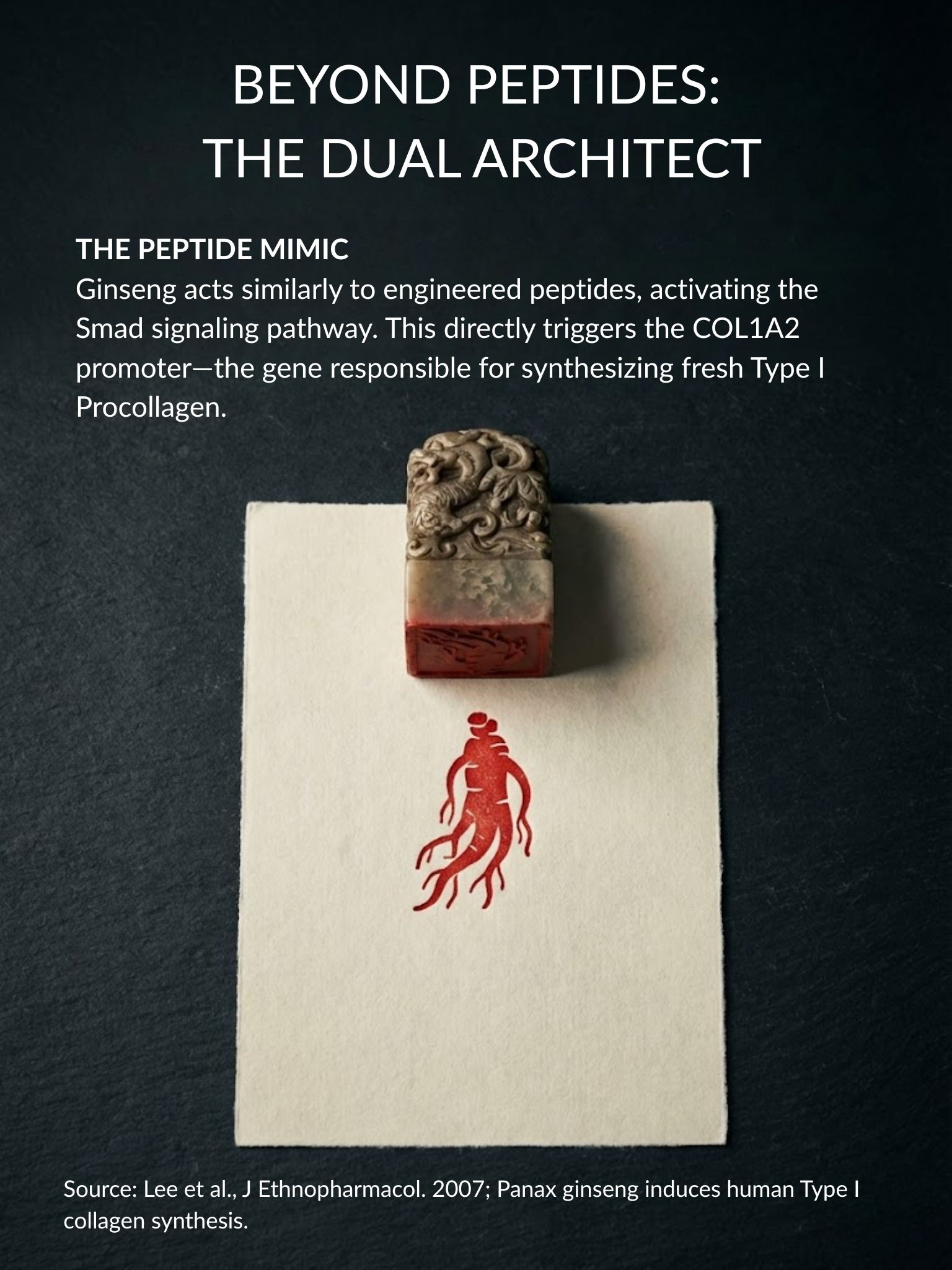
The Ginseng Breakthrough: A landmark study by Lee et al. (2007) in the Journal of Ethnopharmacology revealed that Panax Ginseng extracts can directly bypass the external receptor and activate Smad signaling from the inside.
The study demonstrated that Ginseng treatment induced the phosphorylation of Smad2 in human dermal fibroblasts. The botanical active effectively “hacked” the hotline. It picked up the cellular phone and issued the command: [INITIATE_SYNTHESIS].
By triggering the Smad pathway, Ginseng upregulated the expression of the COL1A2 gene. This mechanism is the specific driver of Panax Ginseng collagen synthesis, leading to a measurable increase in Type I Procollagen production.
Clinical Implication: This means that Red Ginseng is acting as a functional peptide mimic. It is providing the exact same “Build” signal as our body’s endogenous growth factors, but it is doing so via a botanical vector. This validates the concept of Panax Ginseng collagen stimulation as a pharmacological reality, not just a marketing myth.
Section 4: Mechanism 02 — The Seal (Protecting Panax Ginseng Collagen Networks)
Disarming the Sniper
If Smad signaling was the only benefit of Ginseng, I might have simply used a synthetic alternative like TGF-β mimics. But the botanical offered a secondary, protective mechanism that most synthetics lack.
It plugs the hole.
As discussed, MMP-1 is the primary enemy of collagen structure. In photo-aged skin, MMP-1 levels are chronically elevated, constantly chewing through the dermal matrix.
Research published by Hwang et al. (2014) in Food & Function isolated the effects of enzyme-modified Ginseng on UV-irradiated fibroblasts. The results were stark:
- UV radiation naturally caused a massive spike in MMP-1 secretion (the demolition crew arrived).
- Cells pre-treated with Ginseng showed a significant, dose-dependent inhibition of MMP-1.
How does it work? The mechanism appears to be the downregulation of the MAPK/AP-1 signaling pathway. Remember AP-1? That was the transcription factor triggered by UV light that orders the production of “scissors.” Ginseng essentially blocks the AP-1 signal. It prevents the order from reaching the factory floor.
By inhibiting AP-1, Ginseng prevents the upregulation of MMP-1. This ensures that your Panax Ginseng collagen gains are not immediately lost to degradation. It doesn’t just try to build faster than the destruction; it stops the destruction.
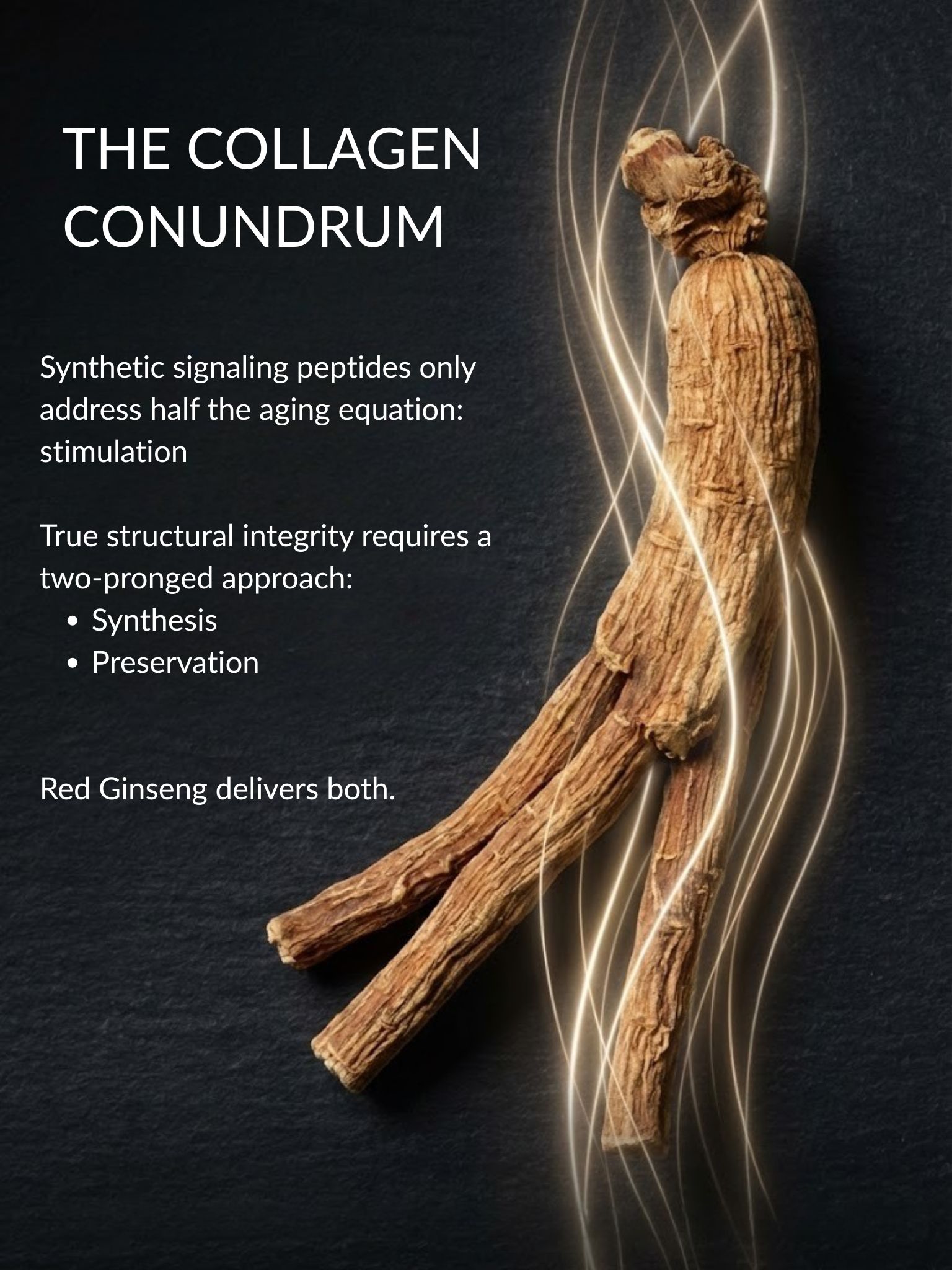
This dual-action profile—Smad Activation (Synthesis) + MMP Inhibition (Preservation)—is what defines the “Biological Architect.” It is a comprehensive management system for collagen homeostasis.
Part 2: The Engineered Synergy (Stacked Signaling)
Introduction: The Necessity of Redundancy
In Part 1, we established that the Panax Ginseng collagen mechanism is a biological powerhouse capable of activating the Smad signaling pathway to build collagen and inhibiting MMP-1 enzymes to preserve it.
If the skin were a simple machine, Ginseng alone might suffice. But the human integumentary system is not simple; it is a complex, redundant, and highly adaptive biological fortress.
As we age, cellular communication channels degrade. Receptors become desensitized. Signaling proteins lose their phosphorylation efficiency. This state is known as Cellular Senescence—the “Zombie Cell” phenomenon. A senescent fibroblast is stubborn; it may receive the Ginseng signal via the Smad pathway but fail to execute the command efficiently because that specific pathway is downregulated.
Therefore, to guarantee structural integrity, we cannot rely on a single door to enter the collagen factory. We need a “Skeleton Key.” We need to attack the problem of collagen loss from multiple, non-competing biological angles.
This brings us to the second and third pillars of the CellTalk™ Complex: The Synthetic Foreman (Palmitoyl Pentapeptide-4) and the Metabolic Fuel (Adenosine).
Section 6: The Synthetic Foreman (Palmitoyl Pentapeptide-4)
The Theory of Matrikines
While Ginseng activates the gene from the inside (entering the nucleus via Smad), I needed a molecule that could trigger the alarm from the outside.
Enter Palmitoyl Pentapeptide-4 (chemically known as Pal-Lys-Thr-Thr-Lys-Ser, or KTTKS). In the industry, this is often referred to by the trade name Matrixyl, and it is widely considered the “Gold Standard” of anti-aging peptides.
But why is it the gold standard? It comes down to a specific mechanism called The Matrikine Theory.
In a healthy dermis, the Extracellular Matrix (ECM) is constantly being remodeled. When a collagen fiber is damaged (by UV light or injury) or reaches the end of its lifecycle, enzymes break it down. As the massive collagen protein disintegrates, it releases tiny, specific fragments of amino acids into the surrounding fluid.
These fragments are called Matrikines. They act as chemical messengers. When a fibroblast detects these specific fragments floating in the matrix, it interprets them as “debris.” It signals a distress code: “Captain, we have structural collapse in Sector 4. Initiate immediate repair.”
The fibroblast then goes into overdrive, synthesizing new Collagen I, Collagen III, and Fibronectin to replace the “damaged” tissue.
Hacking the Feedback Loop
Palmitoyl Pentapeptide-4 is a synthetic, laboratory-engineered copy of a specific fragment of the Type I Procollagen alpha chain.
The Deception: When you apply this peptide topically in the CC Cream, you are effectively “hacking” this feedback loop. You are flooding the dermis with “fake debris.”
- Penetration: The “Palmitoyl” fatty acid chain attached to the peptide allows it to penetrate the lipid barrier of the skin.
- Detection: The fibroblast surface receptors bind to the peptide sequence (KTTKS).
- Reaction: The cell is tricked into believing the skin is heavily damaged, even though it is intact.
- Result: It triggers a massive Wound Healing Response, churning out fresh collagen to “fix” the phantom injury.
The Contrast with Ginseng: This is why the pairing is so critical.
- Ginseng acts via the Smad Pathway (a developmental/growth pathway).
- Palmitoyl Pentapeptide-4 acts via the Matrikine Pathway (a repair/emergency pathway).
We are stimulating the cell from two completely different biological motivations. If the “Growth” signal is ignored by a tired cell, the “Emergency” signal often breaks through the noise. This redundancy ensures that the command to [BUILD] is received, regardless of the cell’s preferred communication channel.
Section 7: The Metabolic Fuel (Adenosine)
The “Tired Worker” Problem
We have the Architect (Ginseng) designing the structure. We have the Foreman (Peptides) shouting urgent work orders. But there is a third failure point in aging skin: Metabolic Exhaustion.
You can shout at a factory worker all day, but if the power is out, the machines won’t run. Collagen synthesis is an anabolic process. It is incredibly energy-intensive. It requires massive amounts of ATP (Adenosine Triphosphate)—the cellular energy currency.
Senescent fibroblasts are often structurally intact but metabolically dormant. They don’t have the energy reserves to execute the protein folding required to make procollagen.
This is why I included Adenosine as the third pillar of the stack.
The A2A Receptor Pathway
Adenosine is a purine nucleoside that functions as a potent cell-signaling agent. Unlike peptides which mimic proteins, Adenosine modulates the cell’s internal engine via the G-Protein Coupled Receptors (GPCRs) on the cell surface.
Specifically, we are targeting the Adenosine A2A Receptor. Research has shown that activating the A2A receptor on dermal fibroblasts triggers a signaling cascade distinct from both Smad and Matrikines:
- cAMP Surge: Binding increases intracellular cyclic AMP (cAMP).
- AKT Activation: This activates the Protein Kinase B (AKT) pathway.
- Non-Canonical Synthesis: This pathway has been shown to promote collagen production independent of TGF-β.
The “Botox-Like” Bonus: Beyond collagen, Adenosine has a profound effect on the cell surface. It modulates calcium transport, which can have a relaxing effect on dynamic contraction. Clinical studies verify that Adenosine is exceptionally effective at improving surface smoothness and relaxing the appearance of periocular wrinkles (crow’s feet) and glabellar lines.
I view Adenosine as the “Fuel Injector” of the formulation. It ensures the cellular environment is energized and receptive. It powers the machinery so that when the Ginseng and Peptide signals arrive, the cell has the capacity to obey.
Section 8: The Formulation Thesis — “Stacked Signaling”
Moving Beyond “Ingredients” to “Architecture”
Now that we have deconstructed the three components, we can understand the logic of the CellTalk™ Complex.
In the current skincare market, there is a trend called “Angel Dusting”—sprinkling tiny amounts of 50 different ingredients into a formula so the marketing team can list them all on the box. This is scientifically unsound. The skin cannot process 50 signals at once.
My philosophy is Stacked Signaling. We do not rely solely on Panax Ginseng collagen pathways; instead, I select a small number of high-potency actives to layer on top of that foundation to achieve a synergistic outcome.
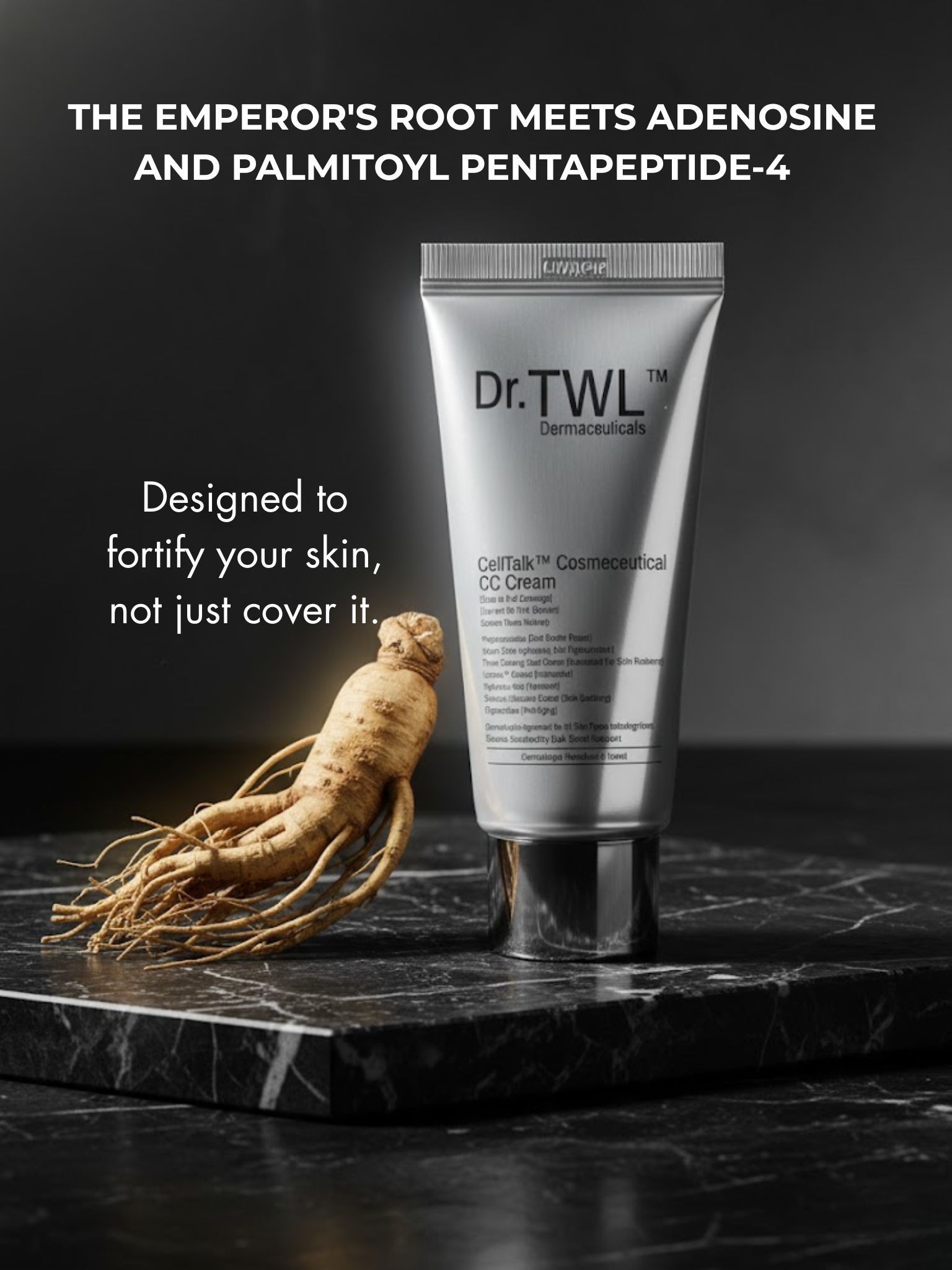
The Synergy of the CellTalk™ Stack:
- The Biological Architect (Red Ginseng):
- Target: Nucleus (via Smad).
- Role: Upregulates the COL1A2 gene.
- Bonus: Inhibits MMP-1 (Stops the leak).
- The Synthetic Foreman (Palmitoyl Pentapeptide-4):
- Target: Surface Receptors (via Matrikine).
- Role: Triggers the Wound Healing Response.
- Bonus: Mimics structural damage to force repair.
- The Metabolic Fuel (Adenosine):
- Target: A2A Receptor (via cAMP).
- Role: Energizes the cell and smooths the surface.
- Bonus: Provides a backup energy pathway.
The Mathematical Result: This is not 1 + 1 + 1 = 3. This is 1 (Signal) x 1 (Urgency) x 1 (Energy) = 10 (Structural Density).
By combining MMP Inhibition (Ginseng) with Direct Peptide Signaling (Matrixyl + Adenosine), we achieve a homeostatic balance that single-molecule formulations miss. We are plugging the hole and turning on the faucet and paying the water bill.
Section 9: The Delivery System — Why a CC Cream?
Skincare in Camouflage
Finally, we must address the vehicle. Why put this complex into a CC Cream? Why not just a serum?
This brings us to the concept of Compliance and Contact Time. A serum is applied once, often at night. It absorbs quickly, and the interaction is finite. A CC Cream (Color Correcting Cream) is worn for 12–14 hours a day. It sits on the skin as a “second barrier.”
The CellTalk™ CC Cream was designed as a “Leave-On Treatment Mask” disguised as makeup. We utilize an oligopeptide-based delivery system that suspends the CellTalk™ Complex in a micro-emulsion along with our specialized Tyrosinase inhibitors that help reduce the production of melanin pigments in skin.
- The Pigment: Provides immediate optical correction (instant gratification).
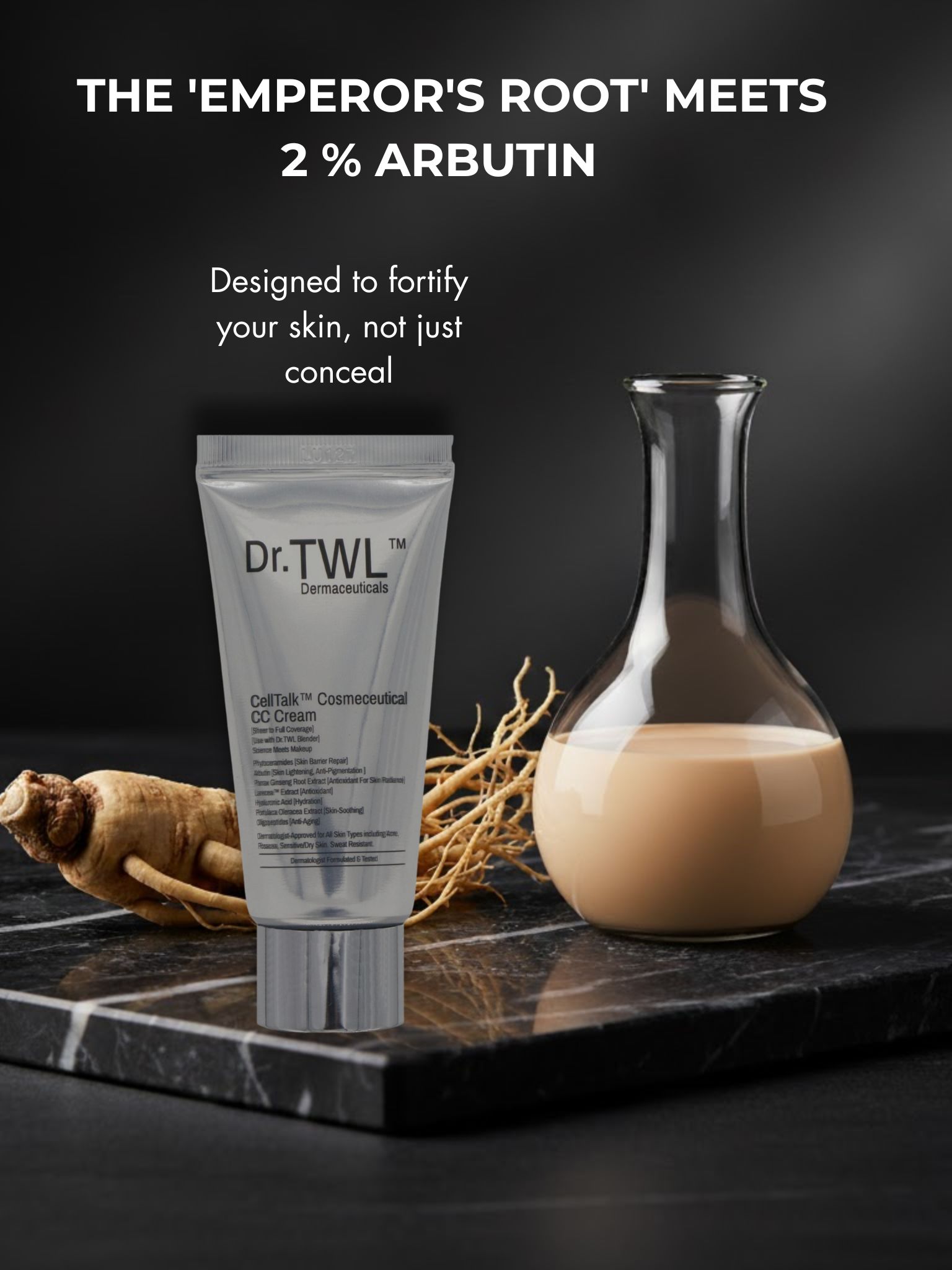
- The Actives: The full CellTalk™ Stack, alongside 2% Arbutin (the gold standard for longer-term therapy and true pigment correction), is precisely embedded within this delivery system for slow, continuous release into the stratum corneum over the course of the day.
This sustained-release mechanism ensures that the Panax Ginseng collagen signals are continuously supplied, keeping the fibroblast in a state of sustained activation while the Arbutin simultaneously maintains continuous tyrosinase inhibition to help reduce unwanted pigmentation on skin.
This bio-synergistic release guarantees comprehensive, 24/7 dermal support, ensuring structural firmness alongside continuous tyrosinase inhibition for optimized skin tone throughout the day with the CellTalk™ CC Cream. It is Dermatological Architecture that you wear to work.
Conclusion: The Future is Bio-Synergistic
We are entering a new age of cosmetic chemistry. The era of choosing between “Clean/Natural” and “Clinical/Synthetic” is over. It is a false choice.
The skin does not care about the origin of a molecule. It cares about the Mechanism of Action.
- Red Ginseng is an ancient botanical, yes. But molecularly, it is a high-performance Peptide Mimic.
- Palmitoyl Pentapeptide-4 is a lab-grown synthetic, yes. But molecularly, it is a key that unlocks the body’s natural Repair Code.
- Adenosine is a basic biological building block, yes. But molecularly, it is the Fuel that powers the engine.
By understanding the distinct roles of the Smad Pathway, the Matrikine Feedback Loop, and MMP Inhibition, we can move beyond simple “moisturizers.” We can stop treating the skin like a canvas to be painted, and start treating it like a building to be maintained.
True anti-aging is not about magic. It is about engineering. And in the case of the CellTalk™ CC Cream, it is about the synergy of the Architect, the Foreman, and the Fuel.
Scientific References & Further Reading
For those interested in the raw data, I recommend reviewing the following foundational papers which informed this formulation:
- The Ginseng/Smad Connection:
- Lee, J., Jung, E., Lee, J., et al. (2007). Panax ginseng induces human Type I collagen synthesis through activation of Smad signaling. Journal of Ethnopharmacology, 109(1), 29-34.[PubMed]
- MMP Inhibition:
- Hwang, E., Park, S.Y., Yin, C.S., et al. (2014). Enzyme-modified Panax ginseng inhibits UVB-induced skin aging through the regulation of procollagen type I and MMP-1 expression. Food & Function, 5(2), 265-274.[PubMed]
- Matrikine Theory:
- Schagen, S. K. (2017). Topical Peptide Treatments with Effective Anti-Aging Results. Cosmetics, 4(2), 16. [ResearchGate]
- Adenosine Pathways:
- Chan, E.S., Cronstein, B.N. (2010). Adenosine A2A receptors promote collagen production by a Fli1- and CTGF-mediated mechanism. Arthritis Research & Therapy. [PubMed]
Author and Review
By Dr Teo Wan Lin — Dermatologist, Chief Scientific Officer, Dr.TWL Dermaceuticals; Founder & Medical Director, TWL Skin. SAB-accredited dermatologist in Singapore leading climate-aware dermatology R&D and ingredient education, published in peer‑reviewed journals and cited by international media. Focus areas at Dr.TWL Dermaceuticals include translational research for tropical-climate formulations, film-forming vehicles, and adherence in humidity/AC transitions; stewardship of the ingredient glossary and consumer education. Credentials: MBBS; MRCS (UK); Accredited Dermatologist, Specialist Accreditation Board (SAB), Singapore Dermatology. Experience: 10+ years in dermatology practice, clinical trials, and patient education. Affiliations: Dr.TWL Dermaceuticals — Dermatology R&D and formulation entity, Chief Scientific Officer; TWL Skin, Singapore — Dermatology research and education hub for climate-aware routines.
Profiles: ORCID | LinkedIn | Author Profile Page
Medical review stamp
Medically reviewed by Dr Teo Wan Lin, Dermatologist, SAB-Accredited. Reviewed on 2025-11-24; last updated on 2025-11-24. This review emphasizes ingredient accuracy, sunscreen filter explanations, and climate-specific usage guidance.
Disclaimer
Educational content only: This page provides general dermatology and ingredient education and does not constitute individualized medical advice, diagnosis, or treatment; never ignore professional advice or delay seeking it because of this content; for personal care, consult a licensed dermatologist.



Leave a Reply
Want to join the discussion?Feel free to contribute!